

 Categories
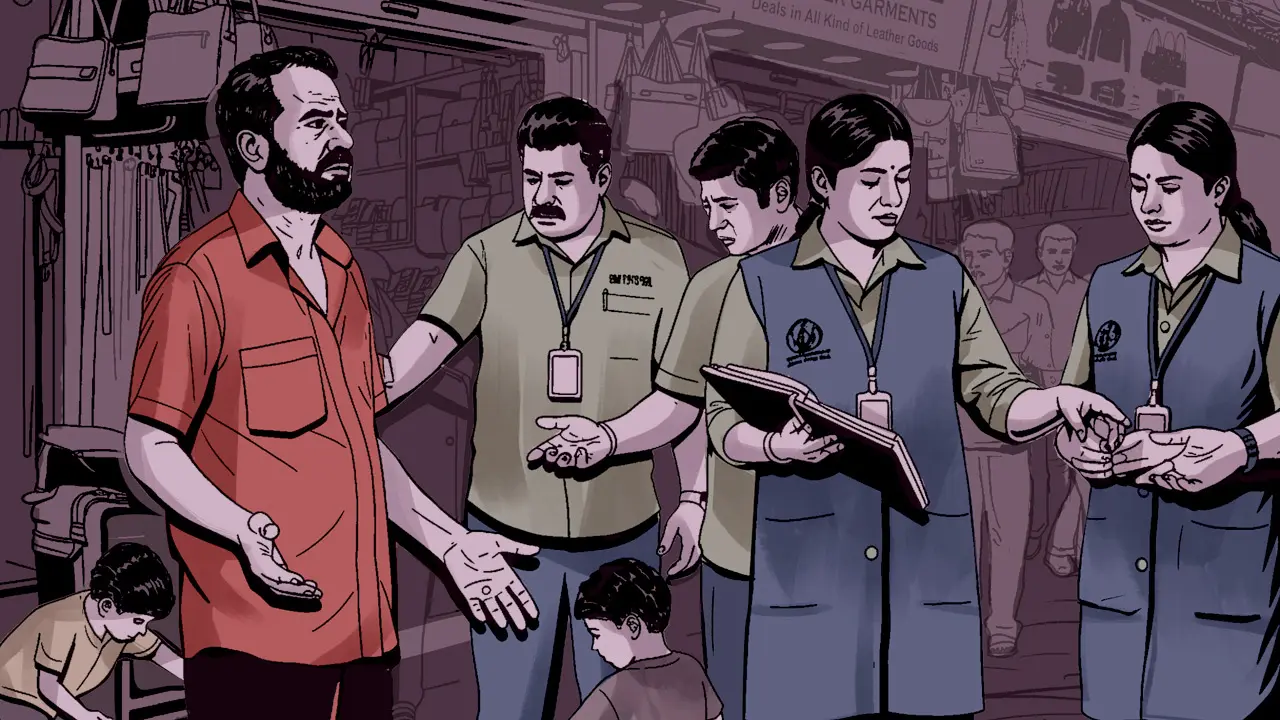
Fake clean-up marshals posing as BMC officials extort Dharavi shopkeepers in Mumbai; police uncover racket targeting small businesses with false child-labour threats.
How a Gang Posed as BMC Officials, Extorted Money, and Targeted Vulnerable Shopkeepers
Mumbai was shaken by the revelation of a fake “clean-up marshal” extortion racket operating in Dharavi. Individuals posed as Brihanmumbai Municipal Corporation (BMC) officials to threaten local shopkeepers and small factory owners with fabricated child-labour cases, forcing them to pay large sums of money.
A detailed investigation shows patterns of impersonation, exploitation of vulnerable workers, and negligence in oversight of contract civic workers.
The Racket: How It Worked
The Accused
According to police and media reports, the accused include:
- Dipali Deepak Dalvi, 24
- Megha Sonawane, 42
- Hanumanta Nagappa Kunchikurve, 36
- One unidentified male accomplice
All three known suspects previously worked as BMC “clean-up marshals.” Their official roles had ended long ago, but they allegedly used the identity and practice to extort money from unsuspecting shopkeepers by pretending to still hold municipal authority.
Step-by-Step Modus Operandi
- The accused entered small workshops and factories in Dharavi, particularly in areas like Rajiv Gandhi Nagar and Ambedkar Chawl.
- They photographed children present on the premises — even if the children were only playing and not working.
- They threatened owners with prosecution under child-labour laws, claiming to be part of a BMC inspection team.
- They demanded immediate payment to “settle the matter,” asking for amounts between ₹5,000 and ₹25,000.
- Victims, fearing legal trouble and lacking knowledge of their rights, paid the money.
- In many cases, the gang returned after a few days asking for more money, often using intimidation.
One shopkeeper, Abid Bigna Sheikh, who runs a bag-manufacturing unit, reportedly paid ₹25,000 under pressure. Others paid smaller but still significant amounts, adding up to tens of thousands of rupees per day for the gang.
How the Racket Was Exposed
A Suspicious Encounter
The breakthrough came when Sheikh grew suspicious after the accused returned a second time demanding more money. He asked for their official BMC identity cards. Their inability to provide IDs and their evasive replies alerted him.
Confrontation and Arrest
On December 1, the gang returned to his unit with additional threats. Local shopkeepers were informed ahead of time, and a group gathered to confront the impersonators. In the commotion, two of the accused fled, but Hanumanta Kunchikurve was detained by locals.
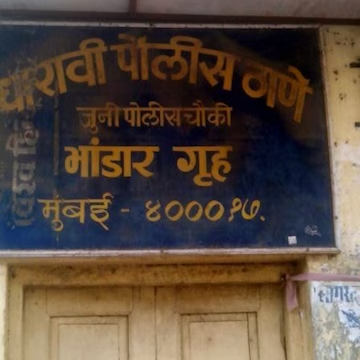
He was handed over to Dharavi Police. Later the same day, the police arrested him from his residence. A formal complaint (FIR) was filed, and charges related to cheating, impersonation, conspiracy, and extortion were added.
Police state that at least four known victims have reported incidents, but the number may be significantly higher because many shop owners fear reprisal or legal complications.
Why Dharavi Shopkeepers Were Easy Targets
Family-Run Workshops
Dharavi is home to a dense cluster of family-run micro-industries: leather goods, metal work, recycling units, pottery, garment stitching, and more. Children of workers or owners are often present at these workshops after school or on weekends.
This made it easy for the impostors to claim child-labour violations.
Lack of Awareness
Many shopkeepers are migrants from different parts of India. Language barriers, fear of authority, and lack of clarity on municipal procedures make them vulnerable to intimidation.
Misuse of a Once-Official System
The BMC’s clean-up marshal program, introduced years ago to curb littering and enforce civic rules, has been controversial. Many marshals were accused of randomly imposing fines or harassment. That system was scaled down, but ex-marshals who knew the procedures and had old uniforms or IDs allegedly misused their former positions to carry out fraud.
Absence of Verification Processes
There is currently no public, easy-to-access database listing active municipal enforcement officers. This makes it difficult for citizens to verify the identity of someone claiming to be from the BMC.
Police Response and Ongoing Investigation
Dharavi Police have taken the following steps:
- Arrested one accused; the search for the remaining three is underway.
- Formed a detection team to track the suspects’ past records and identify more victims.
- Collected CCTV footage from the area for further evidence.
- Coordinated with BMC officials to clarify the status of the accused and to avoid future misuse of civic identities.
Authorities also encouraged residents to come forward with complaints and assured them that no legal penalties would apply for false accusations made by impostors.
Larger Implications for Civic Governance
Rising Cases of Impersonation
Mumbai has seen an increase in cases of individuals posing as officials — from fake police officers to bogus inspectors from the Food and Drug Administration or the electricity department.
Weak verification mechanisms enable such impersonation.
Distrust in Civic Systems
Incidents like this deepen public distrust. When actual inspectors visit and perform legitimate duties, citizens may reject them out of fear of being scammed again.
Impact on the Informal Economy
Dharavi contributes massively to Mumbai’s GDP through its informal manufacturing sector. Extortion targeting micro-units weakens this economy, cripples cash flow, and psychologically demoralizes workers who already operate under challenging conditions.
Voices from the Community
Several shop owners expressed fear and frustration:
- “We hardly make enough to pay rent and salaries. Losing ₹20,000 or ₹25,000 at once is disastrous,” said one factory owner.
- Another added, “We were afraid to speak up. They threatened that if we complained, they would seal our shops.”
Community leaders urged the police for patrols and awareness meetings. Many demanded an official hotline to verify BMC personnel instantly.
What Residents and Shopkeepers Should Do
Here are practical steps recommended by civic and legal experts:
- Always ask for official ID — and take a picture of it.
- Verify with the ward office before paying any amount. All genuine fines come with computerised receipts.
- Never pay cash without a printed BMC receipt.
- Record video or audio of interactions when possible.
- Inform neighbouring shops immediately if suspicious individuals are spotted.
- Report incidents promptly at the nearest police station.
- Pin the local police helpline number near the shop.
Looking Ahead
The fake marshal racket highlights the need for stronger civic governance, transparency, and public awareness in high-density informal neighbourhoods. The police crackdown is a positive step, but it must be supported by:
- A verified public list of authorized civic personnel
- Periodic community outreach
- Stricter identity issuance protocols
- Training for shopkeepers on their legal rights
Authorities must work proactively to prevent similar schemes, ensuring small businesses — the backbone of Dharavi — can operate without fear of extortion and intimidation.