

 Categories
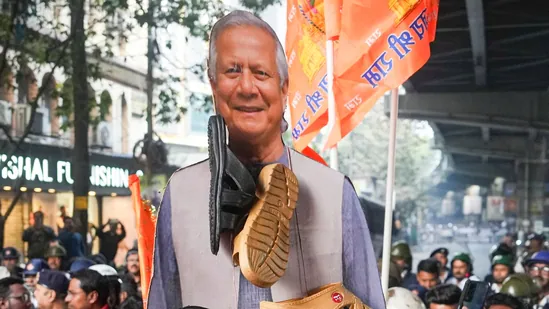
Bangladesh in flames: How a student’s death triggered diplomatic fallout with India and ignited protests that have now reached Kolkata. Explore the full story behind the crisis.
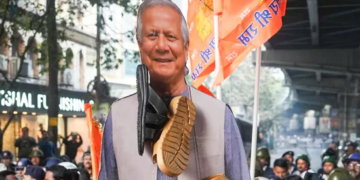
Kolkata: Members of Hindu organisations, under the leadership of Leader of the Opposition Suvendu Adhikari, stage a protest against the alleged killing of a Hindu youth in Bangladesh, near the Deputy High Commission of Bangladesh.(PTI)
Political unrest in Bangladesh has entered a volatile new phase, spilling across borders and triggering diplomatic tensions with India. What began as internal turmoil following political violence and growing instability has now escalated into protests in Kolkata, suspension of visa services, and a sharp exchange of statements between New Delhi and Dhaka.
The situation has raised serious concerns about minority safety, regional stability, and the future of India–Bangladesh relations. This article provides a detailed account of the origins of the unrest, how it escalated into a diplomatic face-off, and what lies ahead for the two neighboring countries.
1. The Origins of the Unrest in Bangladesh
The current crisis is rooted in Bangladesh’s fragile political transition. Following the ouster of former Prime Minister Sheikh Hasina, the country is being run by an interim administration led by Nobel laureate Muhammad Yunus. While the interim government has promised elections in early 2026, the political vacuum has led to intense factionalism, protests, and violent confrontations.
Tensions intensified after the killing of a prominent youth leader linked to anti-establishment movements. His death triggered widespread demonstrations, particularly among students and young political activists, who accuse the state machinery of repression and political bias.
As protests grew, clashes between demonstrators and security forces became more frequent, creating an atmosphere of instability across major Bangladeshi cities.
2. Growing Concerns Over Communal Violence
One of the most alarming aspects of the unrest has been the reported rise in communal violence, particularly against religious minorities. Several incidents involving attacks on Hindu individuals and properties were widely circulated on social media, drawing condemnation from human rights groups and political leaders in India.
A particularly disturbing case involved the killing of a Hindu man in Bangladesh’s Mymensingh district. Reports of the incident sparked outrage in India and became a rallying point for protest movements across the border.
Bangladesh’s interim government has stated that it is committed to protecting all citizens regardless of religion, but critics argue that enforcement on the ground has been inconsistent.
3. Protests Spill Over into Kolkata
As reports of violence in Bangladesh spread, protests erupted in Kolkata, home to a large population with cultural and familial ties to Bangladesh. Demonstrators gathered outside the Bangladesh Deputy High Commission, demanding accountability and protection for minorities.
Political leaders from opposition parties in West Bengal led rallies, carrying placards accusing the Bangladeshi authorities of failing to safeguard minority rights. Protesters chanted slogans, attempted marches, and called on the Indian government to take a firmer diplomatic stance.
Police imposed restrictions and deployed heavy security around the diplomatic mission to prevent escalation, but the protests marked a clear moment when Bangladesh’s internal unrest became a cross-border political issue.
Photo suggestions
- Protesters marching in Kolkata with placards and banners
- Security deployment outside the Bangladesh Deputy High Commission
- Political leaders addressing crowds during demonstrations
4. Diplomatic Fallout Between India and Bangladesh
The protests in India triggered an immediate diplomatic response from Dhaka. Bangladesh announced the temporary suspension of consular and visa services at its High Commission in New Delhi and at missions in Agartala and other cities, citing security concerns.
This move affected thousands of travelers, students, and patients who rely on cross-border travel between the two countries. It also signaled the seriousness with which Bangladesh viewed the protests near its diplomatic premises.
India, for its part, emphasized that it had provided adequate security and that the protests were peaceful and limited in scale.
Photo suggestions
- Closed visa counters at the Bangladesh High Commission
- Notices announcing suspension of consular services
5. Conflicting Narratives from New Delhi and Dhaka
The diplomatic exchange quickly turned into a war of words.
India’s Ministry of External Affairs described some Bangladeshi media reports as exaggerated and misleading. Indian officials maintained that there was no breach of security at the Bangladesh High Commission and that law enforcement agencies acted swiftly to maintain order.
Bangladesh rejected this characterization, calling the protests unacceptable and stating that they created fear among diplomatic staff. Dhaka urged India to take stronger preventive measures to ensure the safety and dignity of its missions.
This public disagreement highlighted deeper strains in bilateral trust.
6. Impact on Indian Nationals in Bangladesh
The unrest has also raised concerns about the safety of Indian citizens living and studying in Bangladesh. Indian medical students studying in Bangladeshi institutions reported feeling unsafe due to frequent protests, roadblocks, and sporadic violence.
Medical associations in India appealed to the central government to intervene diplomatically and ensure the security of students. Families of students expressed anxiety as communication became difficult during periods of unrest.
The situation underscored how diplomatic tensions can directly affect ordinary citizens on both sides of the border.
7. Heightened Security Measures in India
In response to rising tensions, Indian authorities increased security around Bangladeshi diplomatic missions in New Delhi, Kolkata, and Agartala. Barricades were installed, police presence was reinforced, and surveillance was intensified.
Officials stressed that India remains committed to its obligations under international diplomatic conventions, even amid domestic protests.
Photo suggestions
- Police barricades near diplomatic buildings
- Security personnel stationed outside embassies and consulates
8. International and Regional Reactions
The crisis has drawn attention from regional and international observers, who are closely monitoring developments in Bangladesh. Analysts warn that prolonged instability could have implications for South Asian regional cooperation, trade, and security.
Muhammad Yunus has reportedly engaged with foreign diplomats to reassure them about Bangladesh’s commitment to democracy and minority protection. However, skepticism remains, especially as the country moves closer to elections.
Calls for restraint, dialogue, and respect for human rights have come from international civil society organizations, though no direct intervention has been announced.
9. Historical Context of India–Bangladesh Ties
India and Bangladesh share deep historical, cultural, and economic ties. Cooperation on trade, connectivity, water sharing, and security has generally been strong in recent years.
However, relations have occasionally been strained by issues related to border management, domestic politics, and minority rights. The current unrest taps into these sensitivities, making diplomatic handling particularly delicate.
The interim nature of Bangladesh’s government further complicates matters, as policy decisions are closely scrutinized both domestically and internationally.
10. What Is at Stake
The ongoing crisis has several high-stakes implications:
- Diplomatic relations between India and Bangladesh could deteriorate if tensions persist
- Regional stability in eastern South Asia may be affected
- Minority protection in Bangladesh will remain under international scrutiny
- People-to-people ties, including education, healthcare, and tourism, may suffer
The way both governments manage this phase will shape bilateral relations for years to come.
The unrest in Bangladesh has evolved from an internal political crisis into a regional diplomatic challenge. Protests in Kolkata and the suspension of visa services have highlighted how deeply interconnected the two countries are.
As tensions continue, the need for calm diplomacy, credible investigations into violence, and meaningful engagement between New Delhi and Dhaka has never been greater. Whether this episode becomes a turning point or a temporary rupture will depend on the choices made in the coming weeks.
Also Read : Man arrested for pushing teenage student out of moving local train in Panvel